

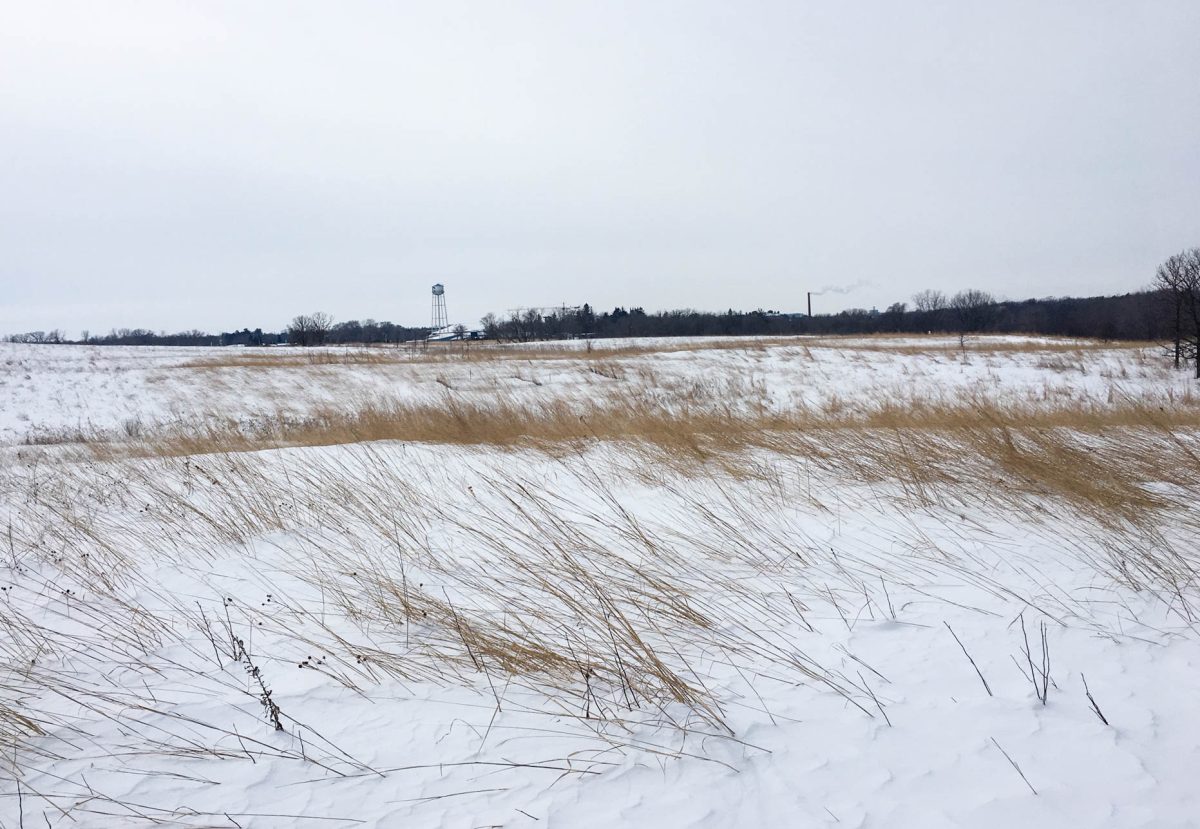
Where do you go if you’re a small mammal in the frozen winter Arb, not brave enough to scamper about in the snow but not quite willing to hibernate the winter away? There is one refuge perfect for you: the subnivean.
The subnivean zone is a space between the bottom of the snowpack and the ground, formed by branches and leaves holding up the snow or the warmer ground melting out small pockets. Mice and voles make tunnels, further expanding the space under the snow. These tunnels are protected from collapse by a thin layer of ice that forms on the bottom of the snowpack, when some of the snow turns into water vapor and then refreezes. Temperatures in this zone stay relatively warm all winter, typically around 32 degrees—not warm, but warm enough for small mammals to survive!
Mice and voles are active throughout the winter, eating seeds and leaves that they find. They have elaborate tunnel systems that connect areas to eat and sleep, as well as tunnels to the surface. They may even continue mating and having litters if the snowpack is deep enough to keep their tunnels warm. In the spring, they reemerge to feed on new plants in the warmer weather.
You may not be able to peek under the snow, but you can still find clues to subnivean life in the Arb. Exit holes from the tunnel systems can be visible on the surface—look for small holes in the snow with tracks near them. The tunnels themselves can sometimes be visible when the snow starts to melt, as they can slump inwards and make long depressions in the snow. As the weather warms this week, it’s a great time to get out into the Arb and see if you can find evidence of these snow-dwellers for yourself!
For more information, see this great article from the state of Montana’s Outdoors Magazine.