

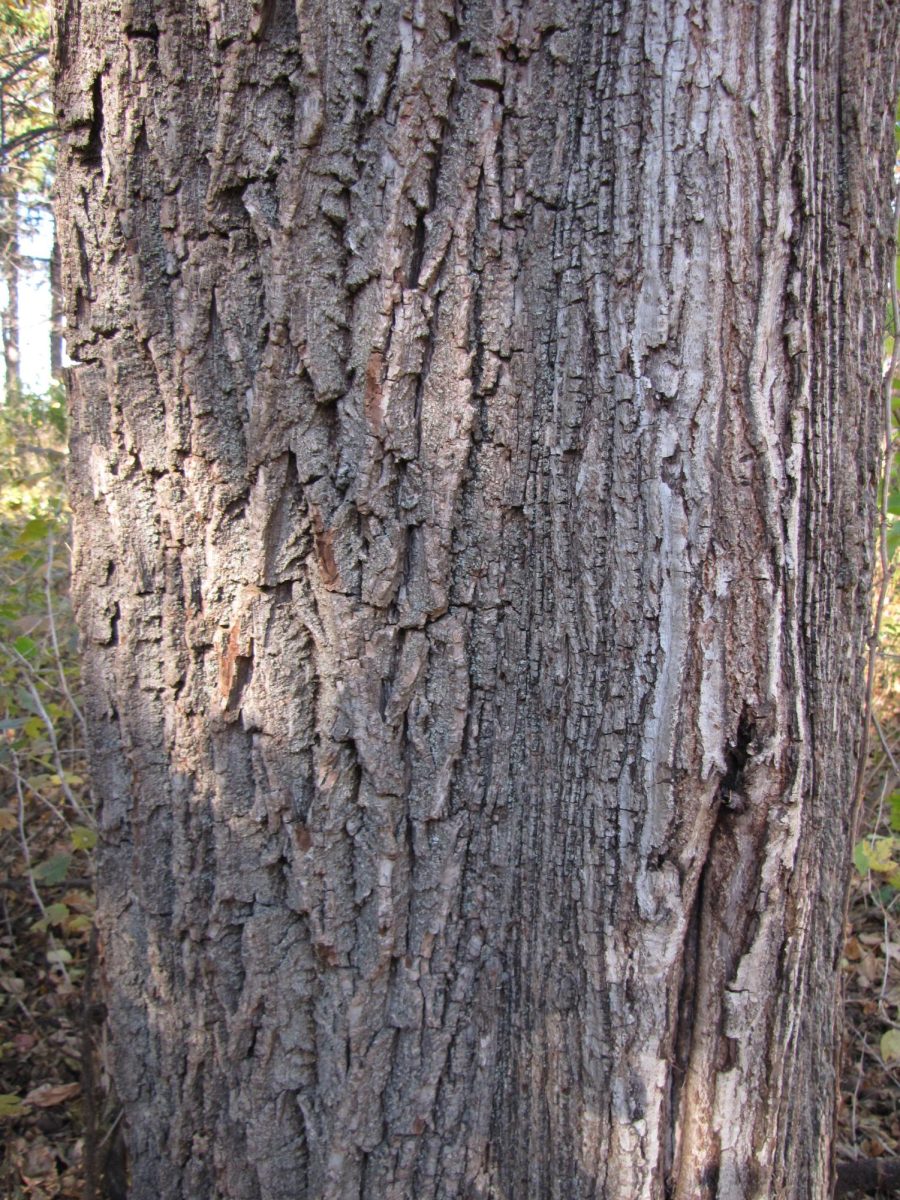
Minnesota is awfully cold right now. A lobe of the polar vortex has shifted southward, bringing Arctic air into the lower 48 states. You may have heard rumors of “exploding trees.” This nomenclature is a somewhat accurate description of a real problem that trees face in the winter.
The wood of a tree is divided into different parts, which is what brings about this phenomenon. The heartwood is in the center, and is dry and stiff, while the sapwood is between the heartwood and the bark, and has higher elasticity and moisture content. On mild winter days, the sapwood and bark layers are warmed. When nighttime temperatures plunge, these outer layers cool rapidly and contract, while the drier heartwood cools slowly, causing stress to build within the tree. This can lead to frost cracks, which are vertical cracks penetrating deep into a tree that extend along the grain of the wood. This fracturing creates a noise reminiscent of a gunshot – hence, “exploding trees.”
Frost cankers are a similar phenomenon, also known as sun scald, though they generally occur as trees come out of dormancy in the early spring and experience sudden temperature changes. Sun scald is specifically attributed to the sun warming the cambial tissue and temperatures dropping at night, freezing and killing surficial patches of tissue. In the Northern Hemisphere, both phenomena tend to occur on the southwest side of trees, because the southwest-facing afternoon sun is the strongest in the winter.
Frost cracks and cankers are serious injuries because they create entry points for decay. It has been proposed that certain trees are more vulnerable to these injuries, specifically young trees with thin bark or trees that experienced water stress during planting.
While enjoying the Arboretum this winter, worry not if you hear a loud noise! You may just be witnessing one of nature’s strange phenomena driven by extreme cold.